Dear Friends,
You are very important to us, and we wanted to make sure you heard directly from us about the latest developments at AUAF. We ask that you please read the messages below from our President and Board Chair. Know that AUAF and our mission continue — unwavering, and with the same deep commitment to our students that has always defined us.
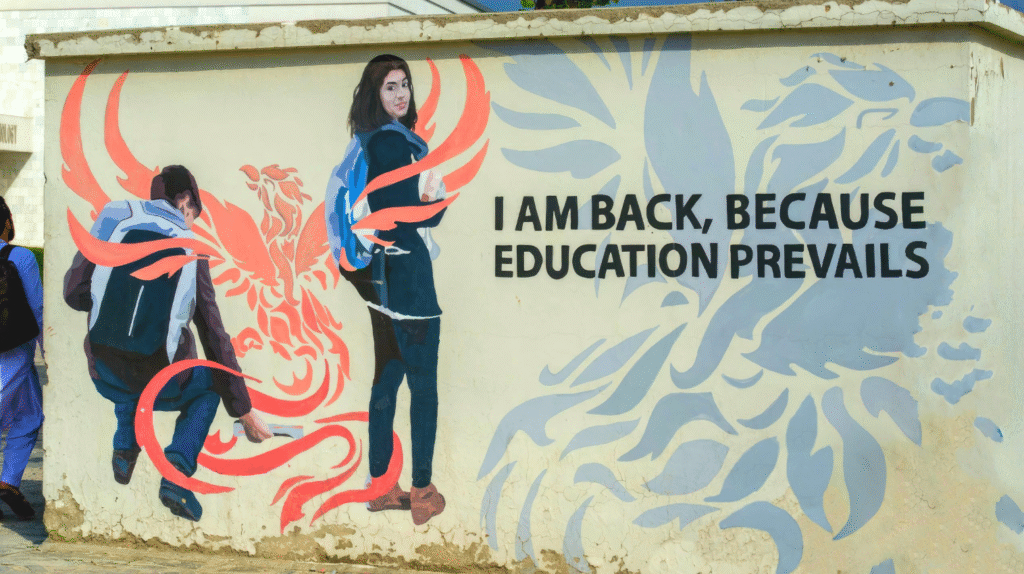
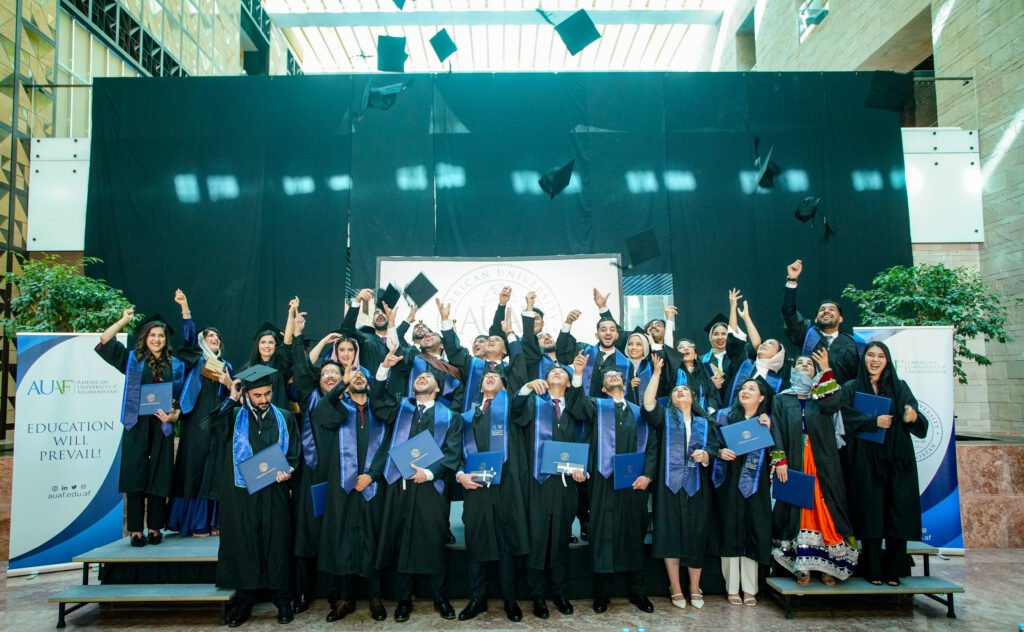
Education will prevail.
A Message from President Dr. Ian Bickford
Dear AUAF Students, Alumni, Faculty, Staff, and Community:
First, I want to express my hope that all of you and your families who are coping with the grave dangers associated with the war in Iran and the strikes in Afghanistan are safe and continuing to do everything you can to stay out of harm’s way. AUAF will continue to be here to do whatever we can to help.
Given the circumstances, it is especially difficult to share the news that after five years of service I have decided to step down as President of AUAF. I have loved serving the imperative mission of AUAF and helping to advance the future of the inspiring and courageous students of this university. However, after much recent reflection, I have concluded it is best that someone else now assume this role leading an institution about which I care deeply.
Shortly before I assumed the Presidency of AUAF, our campus in Kabul had to be closed because of the Covid pandemic. A year and a half later, we lost our campus when the Taliban took power. During the ensuing months, many of our students left the country, and we did all we could to help those students continue their education and find safe places of refuge in other countries. But throughout these difficult times, our focus has always been on the students, current and future, who remained in Afghanistan. That has been and always will be our first priority.
In the five years I have served as President, we have secured more than $55 million in funding for AUAF, allowing us to maintain 100% financial aid for 100% of our students. Despite declines in annual government support during this time, we have also continued to enroll more students each year, including more women, and over the last year, we have navigated through the closure of the U.S. Agency for International Development. This work has happened because of the extraordinary team of AUAF professionals and dedicated supporters we have built, who together will continue to carry AUAF far into the future. I believe this with utter confidence. AUAF has navigated each of these changes and moments of tumult because of the quality of its people and the passion we share for this university’s singular mission of providing the best possible education for Afghan students.
It is because of how much I believe in this university and its mission that I have had to confront in myself the clear recognition that it is time for new leadership. The last five years have taken all I have to give, and I came to the realization that new leadership will galvanize the University and bring fresh insight and dynamism to the community at large.
I am proud of my tenure as AUAF’s president, and I am honored to have served this special institution of learning during a difficult time. I am grateful for the support of the board and will be forever humbled by the privilege to have worked for and alongside you as part of the larger AUAF community of students, faculty, staff, and alumni. AUAF is truly one of a kind, an institution that changes lives, an institution that can and must continue to grow and strengthen with the power of new leadership and new ideas.
Below, the board chair outlines plans going forward, which I will do everything I can to support.
With enduring gratitude and respect, I wish you all the very best.
Ian Bickford
President
American University of Afghanistan
https://www.auaf.edu.af/
A Message from Board Chair Ambassador Said T. Jawad
Dear Members of the AUAF Community,
I am writing, as Chair of the AUAF Board of Trustees, to thank President Ian Bickford for his leadership and dedication over the past five years. Few university presidents have faced the range of challenges that Ian has navigated during his tenure. While we will miss his leadership, we respect and support his decision that this is the right moment for him to begin the next chapter of his life.
At the same time, institutions endure beyond individuals. It is our joint responsibility as Trustees and members of the community of AUAF to ensure continuity and to identify leadership that will bring renewed energy and ideas to further advance the university’s mission.
I am pleased to share that Dr. David Edwards has agreed to serve as Acting President. Dr. Edwards is a Professor of Anthropology at Williams College, the top liberal arts college in the United States. He has written three books and directed two films, all on subjects related to Afghanistan, and he also has extensive administrative experience, having served as Dean of Academic Programs at Williams and chaired the College’s Committee on Educational Affairs and the Faculty Steering Committee. Dr. Edwards has served on the Board of Trustees at AUAF since 2017, and prior to agreeing to serve as Acting President, chaired the Committee on Academic and Student Affairs.
The Board of Trustees has also asked AUAF Trustee, Ambassador Maureen Quinn to chair a Presidential Search Committee, which will begin meeting soon to select AUAF’s next president. In the meantime, Dr. Edwards will be working closely with Executive Vice President Nitin Madhav and the Executive Committee of the Board of Trustees to further advance AUAF’s mission of providing Afghan students with top-flight educational opportunities.
Following the tragic attack on our campus in 2016, we adopted the motto: “Education Will Prevail.” Those words have guided us through many difficult moments, and they continue to guide us today. As long as we continue to work together and remain committed to our mission, education will indeed prevail.
With best wishes,
Ambassador Said T. Jawad
Chair, Board of Trustees
American University of Afghanistan