Archive | News

Chris Taylor, CEO of Mission Essential Personnel, Elected to AUAF Board of Trustees

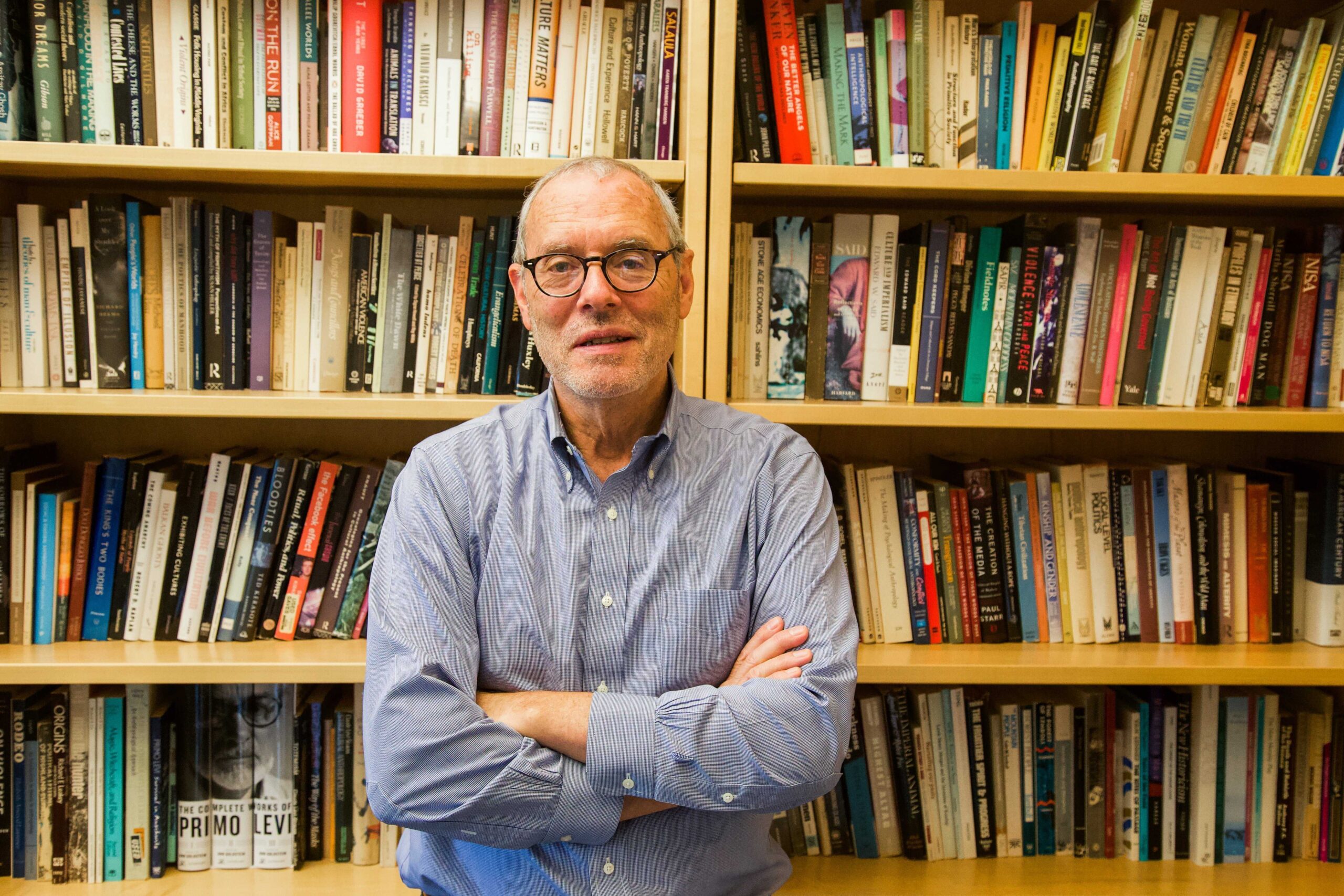
On June 11, 2010, Chris Taylor, Chief Executive Officer of Mission Essential Personnel (MEP), was elected to the Board of Trustees of The American University of Afghanistan (AUAF).

“Mr. Taylor will be a terrific representative of the university,” said AUAF Chairman, Dr. Akram Fazel.   ”With his decades of international experience, Mr. Taylor is a wonderful addition to the Board.  His dedication to Afghanistan and building its capacity – including education for women – is essential for our goal to educate the future leaders of Afghanistan.”

Taylor has more than two decades of international experience and is currently the CEO of MEP, a leading global professional services firm in linguists, cultural experts, and local professionals in Africa, the Middle East, and Central Asia.  MEP also provides intelligence analysis support, training, and technical services for government, civil, and corporate sectors.

Taylor is a graduate of the John F. Kennedy School of Government at Harvard University, where he studied international security and political economy, and earned a Master of Public Administration degree.  He was also the Director of the Harvard Defense & Security Initiative and a member of the Defense Leadership Project at the Harvard Kennedy School Center for Public Leadership.

“I am proud to be joining the Board of Trustees of an organization that is making a real difference in the lives of these students and for the future of Afghanistan,” Taylor said.  “I look forward to helping AUAF meet its goals.”

Friends of the American University of Afghanistan (Friends of AUAF) is the development and communications center for the dedicated supporters of higher education in Afghanistan. Friends of AUAF is a corporation formed under the District of Columbia Nonprofit Corporation Act and is organized and shall be operated exclusively for charitable and educational purposes.

We are dedicated to supporting higher education in Afghanistan through entities such as AUAF, Afghanistan’s only independent, private, not for profit, non-sectarian, coeducational institution of higher learning.

Posted in News0 Comments

Kathleen Parker Article on AUAF: The Power of Education is the Real Gold in Afghanistan

The Washington Post article from this morning on the event Honoring Laura Bush:

By Kathleen Parker
Wednesday, June 16, 2010; A17

Amid all the dark news from Afghanistan, every now and then a sliver of light slips through the cracks.

Afghanistan, it turns out, is rich in minerals. Trillions rich. It’s going to become the Saudi Arabia of lithium, they say. Thanks to vast stores of that resource, plus iron, copper, cobalt and gold, this impoverished, war-torn nation could become a wealthy nation.

No more wars, no Taliban, no heroin, no Osama bin Laden.

Too good to be true, right?

The deposits are real enough, but the question remains: Can a country without mining infrastructure and populated by people who’ve never known prosperity or possessed the collective memory of self-direction (70 percent of Afghans are under age 30) put its resources to constructive use?

Although the potential is “stunning,” according to Gen. David Petraeus, the sidebars and footnotes to this heartening story are full of caveats and “yes, buts.”

There’s also potential for corruption, for fights between the central government and the provinces, for conflict along the border with Pakistan, where some of the richest deposits are located, and for a resurgent and enriched Taliban.

Moreover, turning deposits into a functioning mining industry will take decades. But speculation naturally leads to the hope that Afghanistan could begin to fund its own reinvention and liberate other nations, notably ours, from that burden.

The key, it seems, lies in educating the rising generation of Afghans — in the liberal arts as well as in the technologies needed to advance this new economic potential. There is hope there, too, not least because of the American University of Afghanistan (AUAF), the nation’s only private, nonprofit university.

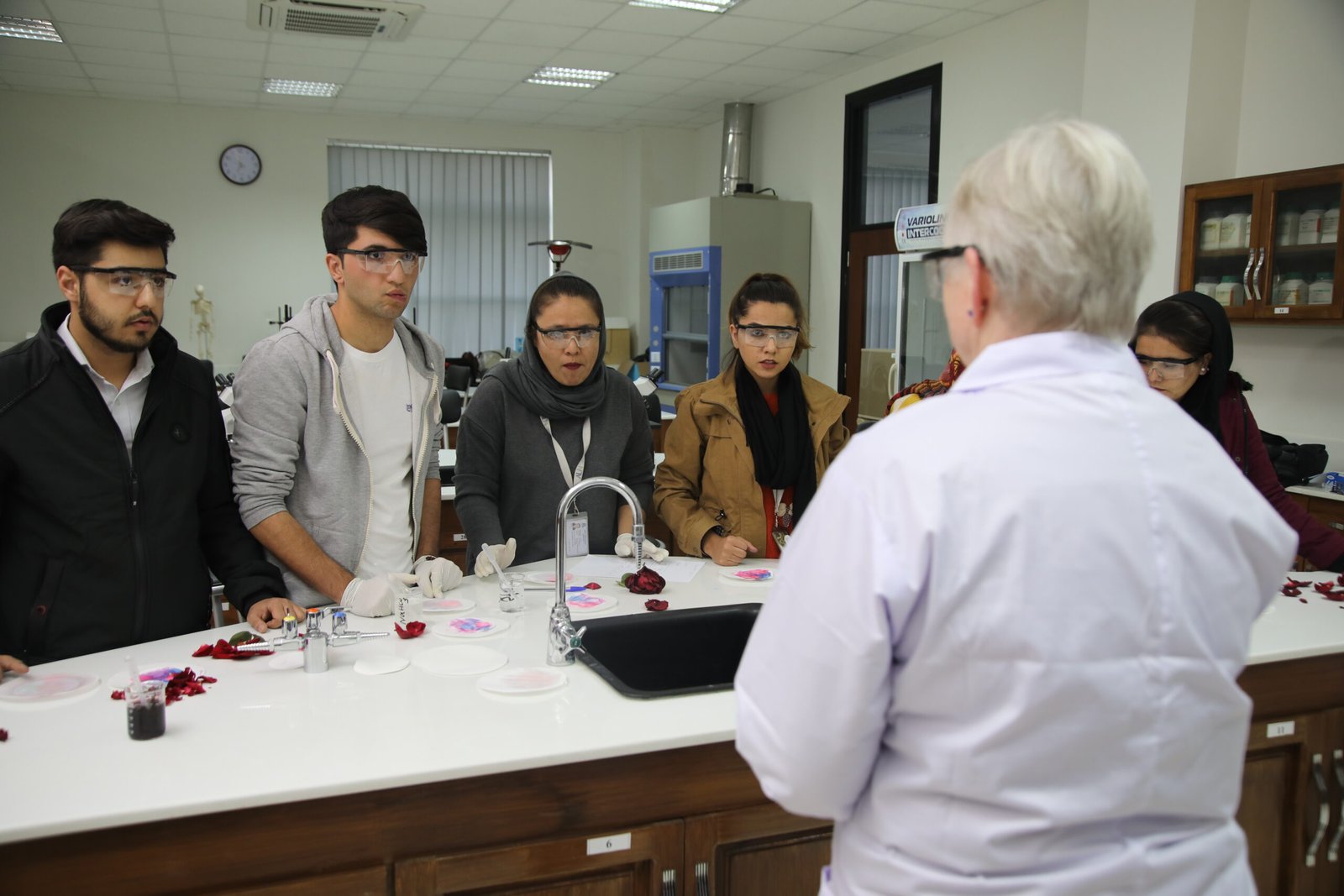
The school was launched with the help of a substantial grant from the U.S. Agency for International Development and built on 48 acres in Kabul. Instruction commenced in 2006, and the first class graduated last month. The school has 500 students, 20 percent of them women, and it hopes to expand to 800 students next year and to 2,000 in five years.

Most Afghans can’t afford the tuition — 70 percent receive financial aid — and are being educated in large part through American donations. Some of those donors attended a dinner in Washington recently to hear from students and to honor former first lady Laura Bush for her support of the university. A new fundraising project is underway for the Laura W. Bush Women’s Resource Center, which will be the cornerstone of a new library and student services building with classrooms, conference space and an auditorium.

And you thought all she did was sit and smile.

The dinner, held at the National Museum of Women in the Arts, was attended by many of those who have worked in the private sector to help bring opportunity to Afghans, especially women. In attendance, to name but a few, were C. Michael Smith, university president; Leslie M. Schweitzer, chair of the Friends of the AUAF; Said T. Jawad, Afghanistan’s ambassador to the United States; and Caroline Hudson Firestone, who has dedicated herself to helping Afghan women and is the author of “Afghanistan in Transition.”

It was one of those events familiar to Washingtonians where philanthropists and government officials convene to sip wine and, if the spirit moves the crowd, to write checks. If inspiration is the lubricant that compels luckier Americans to share prosperity, then this particular evening was rich.

The highlight was the testimony of five students who trekked from Afghanistan to report on the results of American generosity. More than once, they urged the audience: “Don’t feel sorry for us, be there for us.”

Each spoke variously of escaping the Taliban, losing family members, living as refugees in Pakistan. All spoke of feeling safe on the campus, of free speech, of open dialogue with professors and mutual respect — all miracles we take for granted.

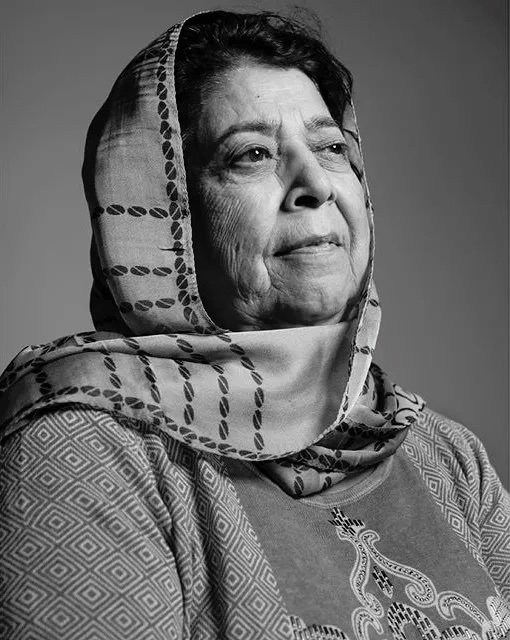
But one young woman stood out. Masooma Habibi, a graduate of Goldman Sachs’s 10,000 Women program at the AUAF, founded an Internet-related consulting business in Kabul and employs nearly two dozen people. Her head covered, she spoke softly in somewhat halting English. The AUAF is “like a dream,” she said. When Americans educate an Afghan, “you are playing with life, so thank you.”

We knew just what she meant.

It seems at times too much to hope that Afghanistan might ever become a stable country, where men and women could lead prosperous, peaceful lives. The key to that kind of future clearly lies in education.

There’s more to mine in Afghanistan than minerals. And there’s gold in these students.

Posted in News1 Comment

Kathleen Parker Article on AUAF: The Power of Education is the Real Gold in Afghanistan

Kathleen Parker Article on AUAF: The Power of Education is the Real Gold in Afghanistan

The Washington Post article from this morning on the event Honoring Laura Bush:

By Kathleen Parker
Wednesday, June 16, 2010; A17

Amid all the dark news from Afghanistan, every now and then a sliver of light slips through the cracks.

Afghanistan, it turns out, is rich in minerals. Trillions rich. It’s going to become the Saudi Arabia of lithium, they say. Thanks to vast stores of that resource, plus iron, copper, cobalt and gold, this impoverished, war-torn nation could become a wealthy nation.

No more wars, no Taliban, no heroin, no Osama bin Laden.

Too good to be true, right?

The deposits are real enough, but the question remains: Can a country without mining infrastructure and populated by people who’ve never known prosperity or possessed the collective memory of self-direction (70 percent of Afghans are under age 30) put its resources to constructive use?

Although the potential is “stunning,” according to Gen. David Petraeus, the sidebars and footnotes to this heartening story are full of caveats and “yes, buts.”

There’s also potential for corruption, for fights between the central government and the provinces, for conflict along the border with Pakistan, where some of the richest deposits are located, and for a resurgent and enriched Taliban.

Moreover, turning deposits into a functioning mining industry will take decades. But speculation naturally leads to the hope that Afghanistan could begin to fund its own reinvention and liberate other nations, notably ours, from that burden.

The key, it seems, lies in educating the rising generation of Afghans — in the liberal arts as well as in the technologies needed to advance this new economic potential. There is hope there, too, not least because of the American University of Afghanistan (AUAF), the nation’s only private, nonprofit university.

The school was launched with the help of a substantial grant from the U.S. Agency for International Development and built on 48 acres in Kabul. Instruction commenced in 2006, and the first class graduated last month. The school has 500 students, 20 percent of them women, and it hopes to expand to 800 students next year and to 2,000 in five years.

Most Afghans can’t afford the tuition — 70 percent receive financial aid — and are being educated in large part through American donations. Some of those donors attended a dinner in Washington recently to hear from students and to honor former first lady Laura Bush for her support of the university. A new fundraising project is underway for the Laura W. Bush Women’s Resource Center, which will be the cornerstone of a new library and student services building with classrooms, conference space and an auditorium.

And you thought all she did was sit and smile.

The dinner, held at the National Museum of Women in the Arts, was attended by many of those who have worked in the private sector to help bring opportunity to Afghans, especially women. In attendance, to name but a few, were C. Michael Smith, university president; Leslie M. Schweitzer, chair of the Friends of the AUAF; Said T. Jawad, Afghanistan’s ambassador to the United States; and Caroline Hudson Firestone, who has dedicated herself to helping Afghan women and is the author of “Afghanistan in Transition.”

It was one of those events familiar to Washingtonians where philanthropists and government officials convene to sip wine and, if the spirit moves the crowd, to write checks. If inspiration is the lubricant that compels luckier Americans to share prosperity, then this particular evening was rich.

The highlight was the testimony of five students who trekked from Afghanistan to report on the results of American generosity. More than once, they urged the audience: “Don’t feel sorry for us, be there for us.”

Each spoke variously of escaping the Taliban, losing family members, living as refugees in Pakistan. All spoke of feeling safe on the campus, of free speech, of open dialogue with professors and mutual respect — all miracles we take for granted.

But one young woman stood out. Masooma Habibi, a graduate of Goldman Sachs’s 10,000 Women program at the AUAF, founded an Internet-related consulting business in Kabul and employs nearly two dozen people. Her head covered, she spoke softly in somewhat halting English. The AUAF is “like a dream,” she said. When Americans educate an Afghan, “you are playing with life, so thank you.”

We knew just what she meant.

It seems at times too much to hope that Afghanistan might ever become a stable country, where men and women could lead prosperous, peaceful lives. The key to that kind of future clearly lies in education.

There’s more to mine in Afghanistan than minerals. And there’s gold in these students.

Posted in Featured, News0 Comments

Rep. Dina Titus speaks about her experiences visiting AUAF

Rep. Dina Titus speaks about her experiences visiting AUAF

Rep. Dina Titus speaks about her experiences visiting the American University of Afghanistan

Posted in Featured, Misc, News0 Comments

View Photos from Event with His Excellency Ambassador Said T. Jawad

Photos from the reception are available online for viewing, free download and printing for a fee. Proceeds go to AUAF.

You can view and download photos here.

Posted in Events, Misc, News0 Comments

In a War-Torn Land, a President Works to Make His University an Oasis

When C. Michael Smith interviewed to be president of the American University of Afghanistan, he faced his toughest questions from an unexpected source: a group of 30 students in Kabul. “They really grilled me,” he says.

The students wanted to know how long Mr. Smith would stick around if he got the job. The university, which bills itself as Afghanistan’s “only independent, private, nonprofit, nonsectarian, coeducational institution of higher learning,” had already suffered from turnover at the top. The former minister of higher education who founded it, in 2004, was its first acting head. Its only previous president, Thomas M. Stauffer, resigned in September 2008, after less than two years of a controversy-marred tenure.

Read the full article here.

Posted in Misc, News0 Comments

Be a friend of AUAF!

Enter your name and e-mail so we could stay in touch


July 2010
M T W T F S S
« Jun    
 1234
567891011
12131415161718
19202122232425
262728293031